
Floor Scrubbing Services
Janitorial Services
Medical Office Cleaning Oregon is essential for healthcare facilities where cleanliness impacts patient safety. For those seeking professional services, maintaining high standards of sanitation and regulatory compliance is our priority in Portland, Vancouver, and across Oregon.
WHY MEDICAL OFFICE CLEANING IS CRITICAL
Cleanliness in a medical setting is not a mere cosmetic necessity; it is a fundamental aspect of care. Clients receiving medical services will always see the cleanliness of the health care provider’s premises as an indicator. Cleanliness in a medical setting is not just about the appearance but an important aspect of patient care; a medical patient considers the quality of a health care provider by its visible cleanliness.
More importantly, proper sanitation reduces the spread of pathogens, protects immunocompromised individuals, and supports overall community health. Healthcare‑associated infections can stem from contaminated surfaces, poor hand hygiene environments, or ineffective cleaning measures.
KEY AREAS THAT REQUIRE SPECIALIZED CLEANING
Exam Rooms
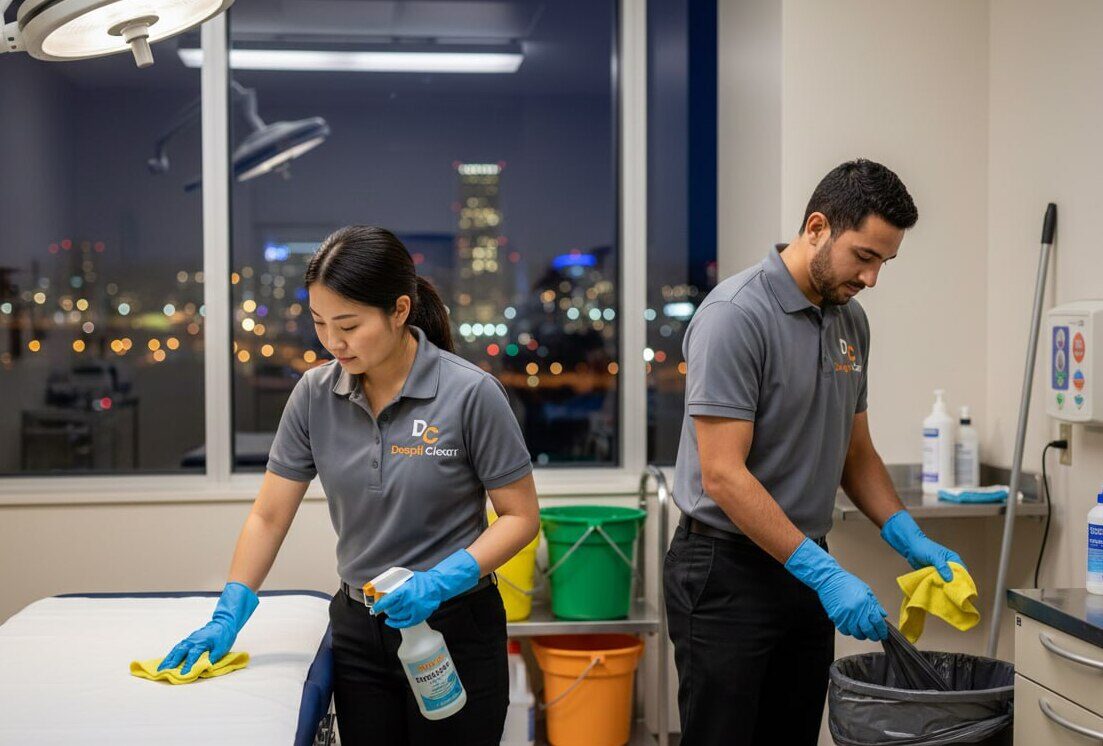
Exam rooms are among the highest risk of contamination. New microorganisms are introduced with each additional patient on various surfaces, including exam tables, stools, counters, light handles, and various medical devices. These rooms must be disinfected regularly and thoroughly to avoid cross-contamination between patients.
Waiting rooms
Waiting rooms are used by many people throughout the day, and as such, they are breeding grounds for germs. Chairs, armrests, reception counters, check‑in kiosks, pens, and door handles are frequently touched and require continuous disinfection. A clean waiting area also instills confidence in the patients that the facility is prioritizing their safety.
Restrooms
Given their use and the dampness, healthcare restrooms require intense sanitation. Bacteria and viruses spread fast in such environments if cleaning is not consistent. Thorough and regular cleaning of the floors, fixtures, dispensers, and high touch surfaces is necessary (ibid).
Reception and Administrative Spaces
Front desks and administrative offices are areas of constant exposure to patients and materials. Germs multiply quickly on telephones, keyboards, touchscreens, and payment gadgets. Cleaning and disinfecting protect staff and visitors without compromising efficiency.
INFECTION PREVENTION AND CONTROL
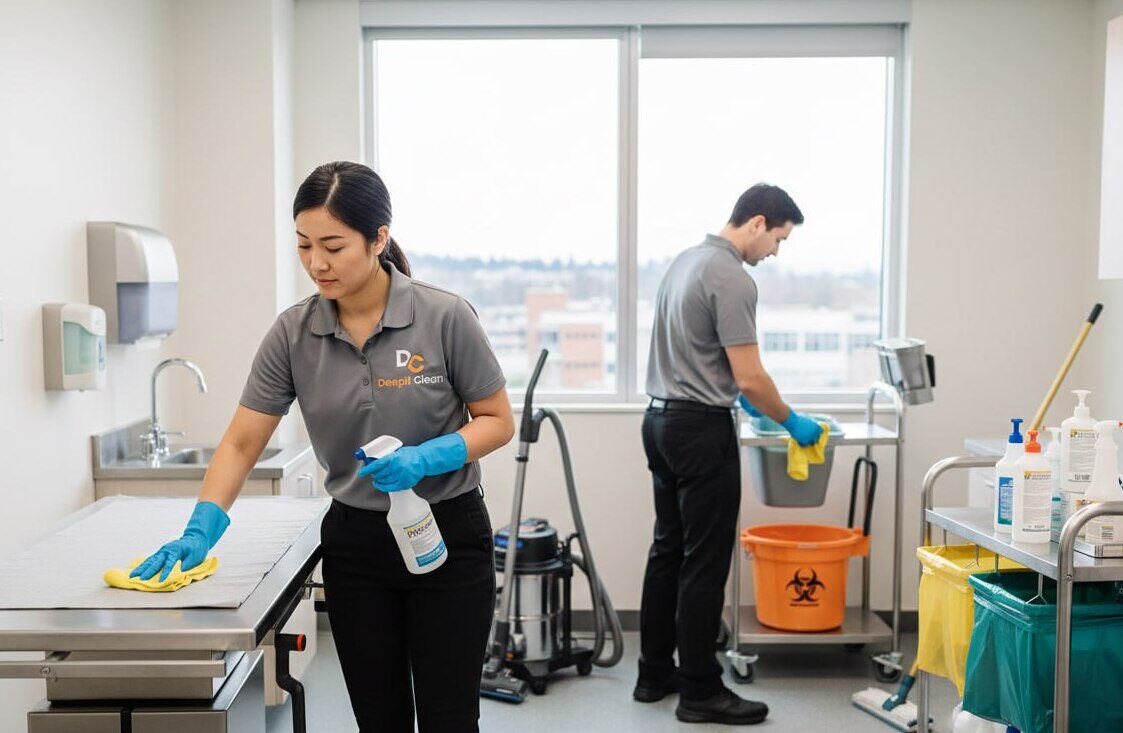
Medical cleaning that is effective is heavily based on infection control principles. These include the frequent cleaning of high‑touch surfaces, the use of approved disinfectants, proper dwell times, and working in a way that prevents spreading contaminants from one area to another. Color‑coded cleaning tools and designated equipment can prevent contaminating restrooms, clinical areas, and public spaces. Irregular cleaning can lead to rapid accumulation of pathogens, making consistency indispensable.
AIR QUALITY AND ENVIRONMENTAL HEALTH
Indoor air quality is a critical issue in healthcare environments. Such dust, allergens, and other particles in the air can irritate respiratory conditions and cause discomfort to patients. Cleaning of floors, vents and surfaces is likely to reduce contamination in the air and help in establishing a healthier environment.
CLEANING FREQUENCY AND SCHEDULING
A medical facility usually needs to be cleaned more often than other commercial buildings. High‑traffic clinics may require several cleaning cycles per day in the patient areas. Daytime touch-point cleaning ensures hygiene during working hours, whereas after-hours cleaning helps ensure more comprehensive sanitation without interfering with care provision.
PROFESSIONAL TRAINING AND EXPERTISE
Cleaning a medical office is a much more complex procedure which requires specialized knowledge. Personnel must be aware of infection causative factors, safety measures, appropriate usage of products, and behavioral requisites in a sensitive environment. Training provides the necessary consistency, thereby reducing the chances of error, which results in compromised safety.
LOCAL CONSIDERATION: Portland and Vancouver
The Portland-Vancouver area has a wide range of populations that are served by healthcare providers whose workload is high. The seasonal sickness, the rainy weather, and the density of the city are also adding to the heightened cleaning tasks. Provision of facilities adopts the advantage of dealing with providers who are well versed with local expectations and working issues.
Watch Video
The advantages of professional medical cleaning services are as follows:
- decreased infection transmission.
- Better patient satisfaction and confidence.
- improved workplace conditions among employees.
- Securing of medical equipment and furnishings.
- Improved professional status.
- Regulatory readiness (support).
These advantages have a direct effect on the success and the integrity of a medical practice.
Recommendations on how to find the right cleaning partner
The healthcare institution must choose healthcare providers who have worked in a medical setting, have trained personnel, quality management, and who can be relied upon to deliver services at the right time. An individual cleaning schedule will make sure that every part of the facility will have the right attention yet will not interfere with operations.
FINAL THOUGHTS
Cleaning of medical offices in Oregon is a dependent aspect of the need to have sanitation in the delivery of medical services. Clean facility will secure the patient, staff performance, and strengthen trust in the provider. Through conscious cleaning initiatives and collaboration with well-learned experts, medical offices are able to uphold safe, compliant and friendly work environments.
Unlike regular offices, medical facilities have vulnerable people, biological agents and a continual flow of patients, staff, and visitors. Sanitation shortcomings of even a seemingly insignificant scale may lead to infection transmission, regulatory noncompliance, or reputation harm. For this reason, medical office cleaning must be structured, consistent, and performed by trained professionals with knowledge of healthcare environments.
FREQUENTLY ASKED QUESTIONS (FAQ)
Why does it make medical office cleaning more complicated than the office cleaning?
Healthcare settings are characterized by increased risks of infections, susceptible populations and greater demands of sanitation.
What is the frequency of disinfection of high-touch surfaces?
Often during the day, particularly in places that deal with patients.
Does professional cleaning enhance patient satisfaction?
Yes. Evidential hygiene has a strong impact on the quality and safety perception of the patients.
CALL TO ACTION
Having a medical facility with the best standards of cleanliness, safety, and professionalism is best achieved through the collaboration of medical cleaning professionals with long-term experience in serving the Portland and Vancouver area.